

GPT-6.1 Terra: OpenAI's mid-range model that drives your computer
On 26 October, OpenAI unveiled GPT-6.1 Terra, a fast model built around visual reasoning and computer use. At nearly half the price of Sol, it goes after the repetitive chores you'd rather hand to a cheap machine.
What OpenAI put in the shop window
On 26 October 2026, OpenAI unveiled GPT-6.1 Terra. It replaces GPT-5.6 Terra and comfortably beats it, according to the announcement that Simon Willison passed on that same evening. As he points out, what a company chooses to show off at a launch often tells you more than the spec sheet does. This time there were three selling points: detailed visual reasoning, precise computer use, and clearer, more natural writing.
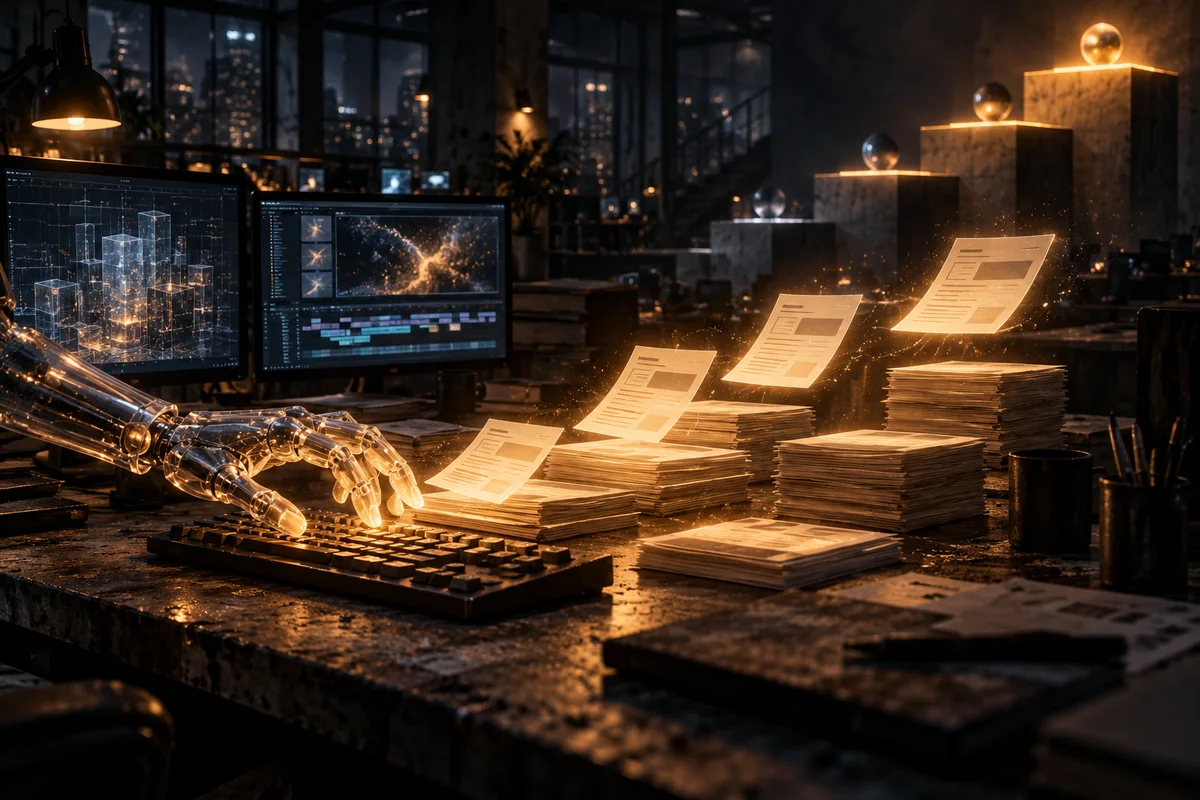
OpenAI’s examples read like a day at the office: drafting proposals, interpreting technical drawings, filling in forms and editing videos. In other words, the stuff a working day is made of. In most companies, it’s also the stuff that gets quietly passed down the corridor until it lands on the newest hire’s desk.
A four-storey line-up
Terra joins what Simon Willison describes as OpenAI’s current top line-up: GPT-6 Astra, GPT-6.1 Sol, GPT-6.1 Terra and GPT-6 Luna. He compares it to Anthropic’s Sonnet. It’s neither the cheapest nor the priciest in the family, which oddly makes it harder to know when you should reach for it. It’s the classic middle-child problem.
The prices reported by Simon Willison show exactly which floor it lives on: $1 per million input tokens and $5 per million output tokens. That’s almost half the price of GPT-5.6 Terra and GPT-6.1 Sol, and roughly ten times the price of GPT-6 Luna. These figures come from that one source only.
Willison notes that computer use shows why a cheaper model matters. It’s exactly the kind of work you hand to an agent for automated, repetitive tasks. Once you have a machine clicking thousands of times, the price per million tokens is no longer a rounding error. It becomes a line in the budget.
A salesman who talks it down
The most useful part comes from a Hacker News comment by Ted Sanders, who works at OpenAI, as reported by Simon Willison. In his view, Terra is probably better than Astra and Sol at technical communication and about as good at vision and computer use. It’s also much faster, and slightly weaker at most other tasks.
For developers using the API, he pitches it as a middle option: cheaper than Sol but clearly more capable than Luna, especially for vision, computer use and communication. For subscribers, he sums it up himself: “it’s not a bombshell release”. If you keep hitting your usage limits, Terra may let you get a bit further. An insider launching a product without once calling it a “game-changer” is frankly the rarer sight of the week.
The pelican test bench
True to his ritual, Simon Willison had Terra draw a pelican riding a bicycle at every reasoning level. At the highest level, the drawing cost 11.3161 cents and took 4 minutes and 11 seconds. He also published a grid comparing the pelicans from every reasoning level of all four models (Astra, Sol, Terra and Luna). It’s a handy way to judge how much drawing you get for your money.
One question remains. A model that fills in your expense forms in seconds is nice, but can it also explain why they still have to be printed, signed, scanned and emailed to the person sitting next to you?
Sources (1)
- GPT-6.1 Terrasimonwillison.net
Written with AI assistance from the sources cited above, then reviewed and approved before publication by Sébastien Soulier.